
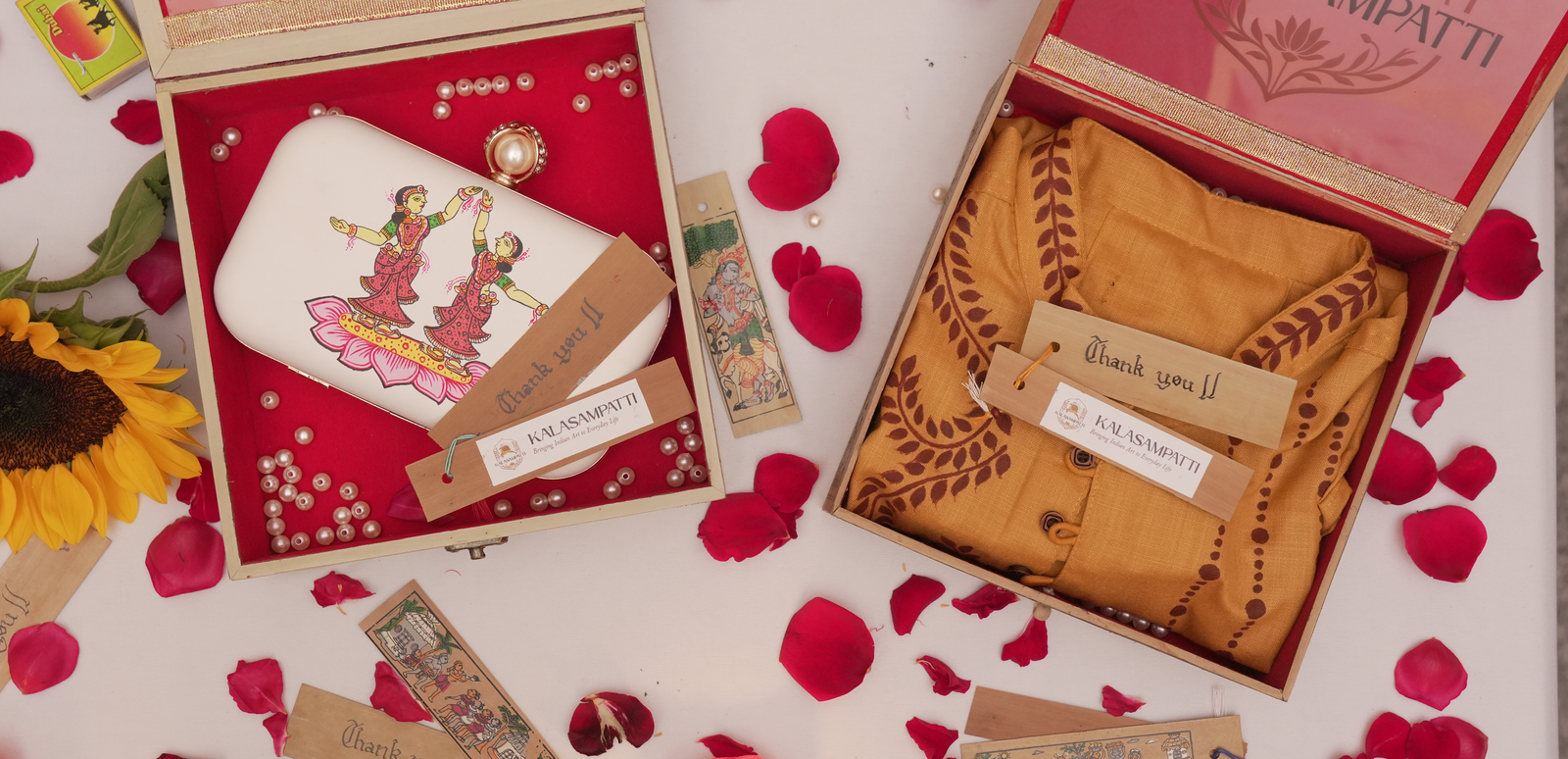
Art, humanity’s oldest storyteller, has always commanded a place of reverence in our lives. As civilisations rose and fell, art stood witness, preserving their tales of wisdom and hope, carrying every yesterday into every tomorrow. Alongside art existed another quiet companion: utility. Created not for admiration, but for purpose.
Time travelled, and while utility remained anchored to purpose, art ascended onto pedestals of higher reverence, but increasingly confined to walls. Reverence soon became distance, and a subtle veil descended between art and everyday life. In many ways, that distance is intentional. Museums and galleries where masterpieces occupy the centre stage are playing a vital role in the preservation of art, allowing it to be admired and appreciated in its purest form.
This, however, is only one among the many relationships art can have with human life. As utility became essential and art a fleeting want, the two philosophical cousins never lost what they had always shared: an extraordinary ability to forge deep emotional connections.
A wedding sari passed through generations, or an oil portrait witnessing the passage of time, becomes a cherished companion to our lives, woven into our memories and celebrations. Such objects transcend functionality or aesthetics alone into expressions that are larger and more meaningful. And in this melange lies a canvas larger than life.
Functional Art: Coming together of Aesthetics and Functionality
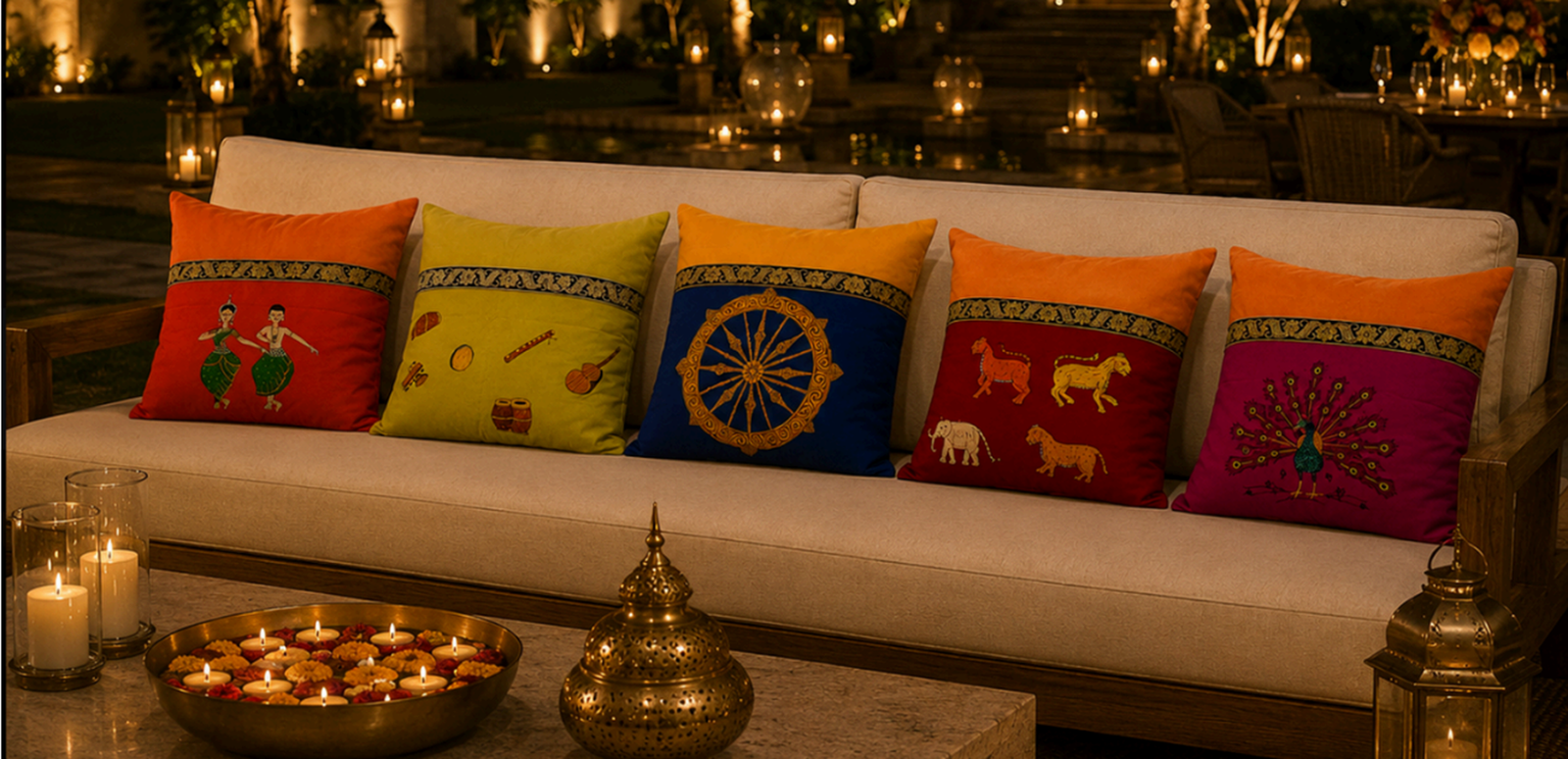
A thing of beauty being joy forever is not merely poetic, but equally scientific. When art becomes functional, the touch and feel open up deeper feelings of physical interactions, comfort, cognitive and sensory engagement. Beauty is no longer seen, but experienced. Extensive studies in this subject of Neuroaesthetics suggest that this is why functional art feels so deeply human.
The value of this expanded canvas extends beyond aesthetics alone. Functional art expands the vocabulary of personal expression. The spaces we occupy and objects we live with begin a conversation on who we are long before we introduce ourselves with words.
A painting on a wall defines the room, while a set of cushion covers defines the way we perceive a room. A lamp enters into an ongoing dialogue with its surroundings, while the plate at the dinner buffet is the first to welcome and greet. This dynamic layering gives the mobility to reposition, repurpose, or re-contextualise over time, and by doing so, art is no longer a part of the static décor but becomes part of the life unfolding around it.
The same is true of collecting. Multiple art forms can coexist within a single environment without competing for the same physical space. The dining table, living space, bookshelf, and the corner in the garden may each become a setting for a different artistic language.
A Pattachitra teapot at the table, a Saura planter in the garden, and a palm-leaf paper holder on the desk may together create a collection that unfolds across an entire home rather than a single wall. Perhaps that is why we continue to feel deeply drawn to objects that are both beautiful and purposeful.
Indian Art Meets Functionality and Design
When the masterpiece we hold is born in a cradle of art rooted in Indian soil, it ceases to be a mere object carrying an artistic motif; it stands now as an identity, a manifestation of a living ethos.
Through this realisation, the encounter acquires an added layer of depth. One that resonates with the primal song of the land, offering a lyrical ode to generational families and communities for whom their craft was a form of sacred worship.
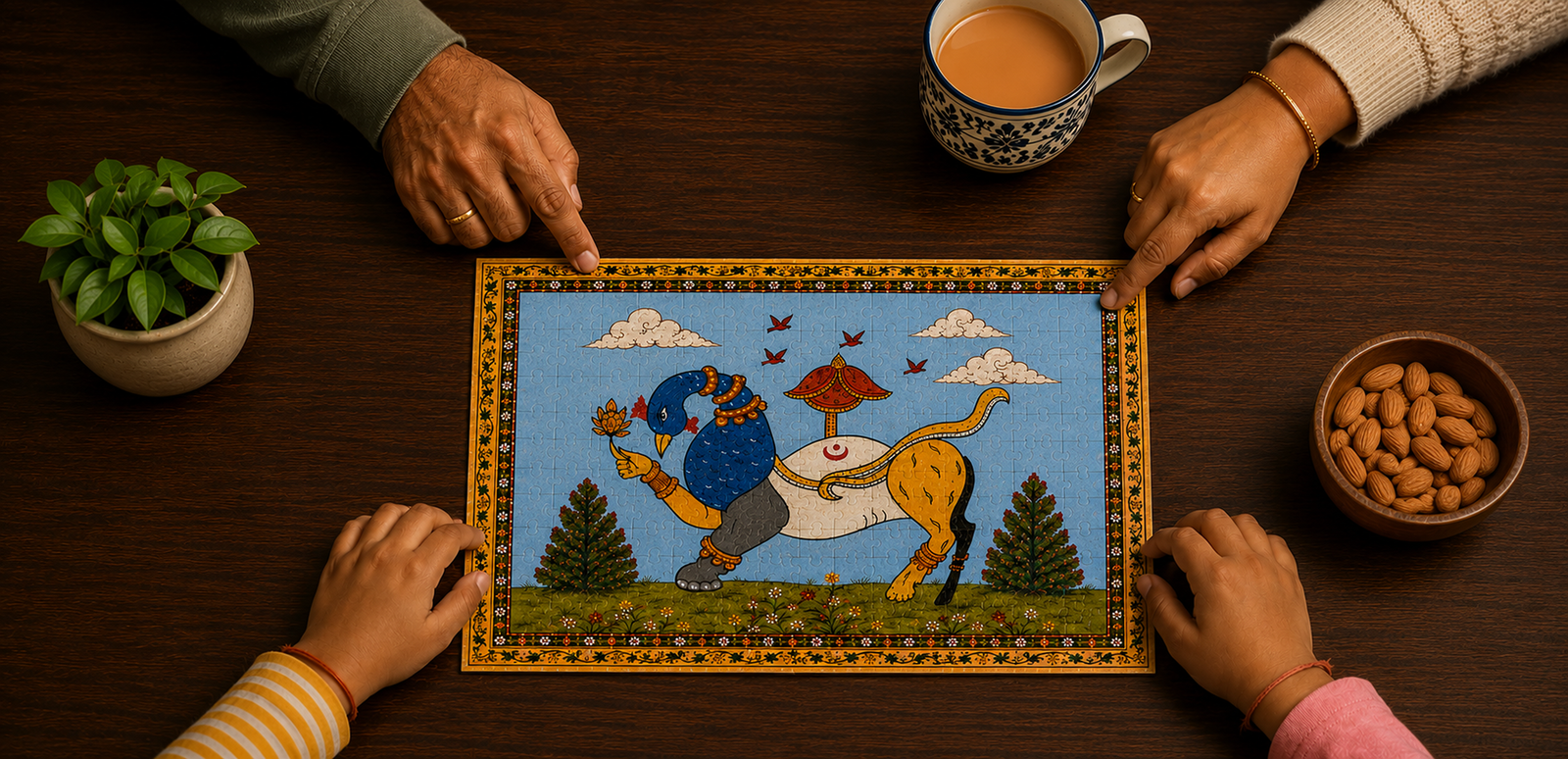
A Pattachitra-inspired evening clutch carrying the Odissi dance gracing a special celebration. A Saura art vase holding fresh long-stemmed roses for a blushing bride. A Nabagunjar jigsaw puzzle bringing generations together on a rainy evening.
To invite such authenticity into our private spaces is to welcome far more than aesthetic grace. We bring home a repository of cultural memory, a sacred lineage, and an inherited treasury of storytelling. Ultimately, it awakens a quiet sense of “apnapan” – a profound emotional closeness where physical ownership dissolves into a shared spirit with the artisans themselves. Each hand-painted piece becomes a meaningful continuation of a timeless ancestral journey.
The spirit carried by these masterpieces moves beyond the physical wall and into the active rhythms of daily life. There, the narrative continues, thriving seamlessly in the very life that unfolds around it.